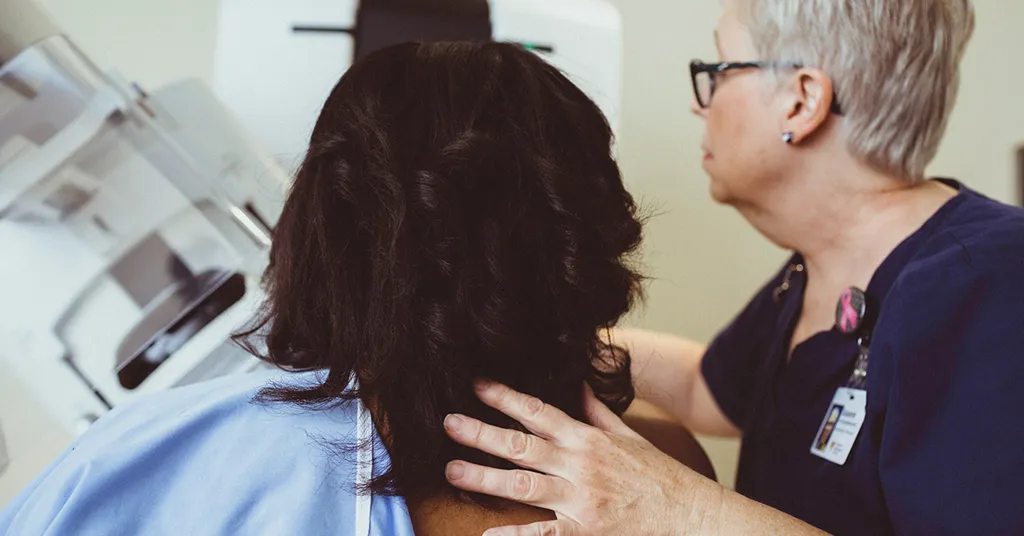
Your guide to breast cancer screening

When it comes to your health, knowledge and proactive care are powerful tools. This is especially true in breast health, where detecting cancer early can lead to more treatment options and better outcomes. Most breast cancers are found in people with no known genetic link, which is why routine screening is so important.
The goal of screening is to catch signs of cancer before symptoms appear. But a truly effective plan isn’t one-size-fits-all; it depends on the purpose of the exam, using the right technology, and your personal health profile. WHA’s American College of Radiology–accredited, FDA-regulated screening mammography program is a great first step for most people, but let’s look at the whole process.
Screening vs. diagnostic breast imaging
While the technology may be the same, screening and diagnostic tests serve different purposes.
- Screening tests are proactive and performed when you have no symptoms. The goal is to find early signs of cancer. A screening mammogram is the most common example.
- Diagnostic tests are reactive and are used when there’s a specific concern—such as pain, nipple discharge, a lump you’ve felt, a skin change, or an abnormal result from a screening test.
It’s vital to report any breast symptoms before scheduling routine screening. If you arrive for a screening mammogram with symptoms, the exam cannot proceed; you’ll need an order from your provider for the correct test.
Understanding breast imaging modalities
Mammography
Mammography is the gold standard for breast cancer screening. It uses very low-dose X-rays to create images of breast tissue.
- As a screening tool, it’s a routine annual test beginning at age 40 for those at average risk. In many situations, you don’t need a referral to schedule a screening mammogram (but do check your insurance coverage).
- As a diagnostic tool, it involves more targeted images to investigate a specific symptom or finding. Diagnostic mammograms are ordered by a provider.
While some people find the pressure during a mammogram uncomfortable, it should not be severely painful. If you experience significant pain, tell your technologist.
Breast ultrasound
An ultrasound uses sound waves to create images and is an important partner to mammography—it supplements it, but doesn’t replace it.
- As a supplemental screening tool, it is sometimes recommended along with a mammogram for those with dense breast tissue or other high-risk factors.
- As a diagnostic tool, it’s most commonly used to get a closer look at something found on a mammogram or to investigate a symptom like a lump.
Breast MRI (Magnetic Resonance Imaging)
An MRI uses magnetic fields and contrast dye to create highly detailed images. It is not a routine screening tool for the general population because it has a higher rate of false positives.
- As a supplemental screening tool, it is recommended only for those at a very high risk of breast cancer.
- As a diagnostic tool, it can be used to get more information after a biopsy or when mammogram and ultrasound results are unclear. MRI is also sometimes used to check for the extent of cancer before surgery.
Think of breast cancer screening like an inverted triangle: broad at the top, narrow at the bottom. Mammograms are designed to screen a large group to catch the smaller percentage of people who may need more testing. If a screening flags something, it doesn’t necessarily mean cancer—it means the system is working.
Personalizing your screening plan
While annual screening mammograms starting at age 40 are the standard for people of average risk, your individual risk—and sometimes characteristics of your breast tissue—may result in other recommendations.
Assessing your personal risk
Your overall risk for breast cancer is an important factor in deciding when and how to screen. Tools like the Gail Risk Model help estimate a person’s lifetime risk, but these models may not capture everything. For example, Black women are more likely to be diagnosed at younger ages and with more aggressive disease, and current models may underestimate that risk. The model is also less reliable for people with high-risk genetic mutations (such as BRCA1/2) or with a family history that includes multiple cases of breast or ovarian cancer.
Because of these limitations, risk scores should never be the only guide. Your provider’s clinical judgment, combined with your personal and family history, helps ensure your plan reflects your unique circumstances. This individualized approach is especially important for groups who face health disparities, making it less likely that anyone is underdiagnosed or diagnosed too late.
Understanding breast density
Breast density describes how much fibrous and glandular tissue you have compared to fatty tissue. Radiologists classify breast density into four categories:
- Almost entirely fatty
- Scattered areas of fibroglandular density
- Heterogeneously dense (may make it harder to spot small abnormalities)
- Extremely dense (can lower the sensitivity of mammograms)
About half of people fall into categories 3 or 4, but only about 10% have extremely dense breasts where mammogram sensitivity is most affected. Dense tissue is common and not a cause for alarm, but it can make mammogram results harder to interpret. If your results mention you have extremely dense breast tissue, your provider can help you understand whether supplemental screening, such as ultrasound or MRI, is appropriate.
Where you go for care truly matters
Not all imaging centers are created equal. Accredited facilities like WHA’s are regulated by the FDA and held to rigorous standards for equipment, technologist training, and radiologist accuracy. This ensures your results are both safe and reliable.
In contrast, non-accredited services, including some mobile ultrasound events promoted as “more comfortable,” can provide false reassurance or unnecessary worry. When it comes to your health, accuracy is essential. Always choose an accredited imaging center that employs or contracts with board-certified radiologists.
The simple truth of breast cancer screening
The most important takeaway is this: annual mammograms starting at age 40 save lives. But screening is not one-size-fits-all. Your provider is your partner in tailoring the right plan based on your personal and family history, breast density, and other risk factors. For the most accurate results, always choose an accredited imaging center that works with board-certified radiologists.
When it comes to your breast health, evidence-based care and trusted guidance are your strongest allies. Talk with your provider and schedule your mammogram today.